
Making Space for Disease
when a loved one is terminal

“I can see you’re bored. We’re going to stop now. It’s a lot of information.”
My 82-year-old dad, who had been very quiet, looked up at the nurse and said, “I’m not bored. I’m just scared.”
And the tears started to flow from my eyes. All of the stress and fears and exhaustion from the past month came flowing out. As I quietly reached for a tissue in my purse, I was aware of how much we’ve been through together, he and I, over the past six months and how it has intensified in the past four weeks.
His life has changed so much. He lost his wife—my mom—of 60 years this past May and is not coping well with loss, grief, and isolation. Yet in so many ways I see him doing so many things right. He shows up each day and perseveres through routine appointments, daily tasks in and out of the home, the death of his dog, decisions on Mom’s headstone, and the pesky battles of canceled credit cards and insurance policies as well as higher than normal bills from the internet provider. Because all of this takes energy. And those in grief have limited supplies of energy.
But when his physician told him she noticed a new spot on his lung, we were put on alert. As a lung cancer survivor from many years ago, we knew what this could mean and were leaning into the ambivalence. Months went by and the spot was still there. But this time the new scan showed spots on his liver too—a lot of them.
//
When do our children get faster than us and outrun us? Is it age 7? Or even 5? I used to be able to catch them on any playground or in any parking lot. Now they are absolutely quicker than me and can outrun me in a game, time of danger, or in a time of resistance.
When do we, as children, get stronger than our parents? Stronger physically and mentally? How is it that I am watching my strong and capable dad use tools like canes and walkers as I walk slowly next to him now, worried he will topple over? How is that he has begun to both ask me and trust me to take over his financial matters? I sit and wonder at the sheer irony of it all.
//
The cancer was confirmed. Together we go to every appointment—oncology, port placement, pet scans, infusions. I promised him he would not do this alone. I stay over. I drive. I listen. I ask questions. We do errands. I keep track of appointments. We stop at Holiday gas station so he can make his coffee just the way he likes it—weak with lots of sugar. We get pizza at the same pizza place he and Mom used to go to before I was born, sitting in the same booth they used to. I hear about how he would pick her up after work when they were dating and bring her to her parents’ home and learn where they each were when the Fridley tornado destroyed her high school in 1965. I drive away with Taylor Swift’s “Eldest Daughter” song playing on repeat and tears on my cheeks.
The biggest surprise to me was that he wanted to live. He was in shock and deeply saddened by the new cancer diagnosis. But he wasn’t taking the grief, depression and loneliness of the past six months without Mom as his ticket out of this life—sitting back and doing nothing. He said he did not feel old and he did not feel like he was at the end of his life. He chose immunotherapy with his oncologist as a way to stay here longer. I did not advise, nor did I need to convince.
Yet two days after his first infusion, he was doubled over with severe abdominal pain. It took them a few days, but eventually they found that the tumor on his liver had an abscess, or large infection, on it. Forty-four days later, he is still fighting that infection—with antibiotics and even a JP Drain that was inserted into the abscess. It has done a number on him and sent him down a dark and twisty path of long hospitalizations and shorter stays at transitional care units—wash, rinse, and repeat this cycle ad nauseum. Throughout, I have seen him get weaker, not stronger.
Yet even at his sickest, he asks me if I have called his doctor in oncology to find out when his next treatment is. I assure him it is on the calendar.
As I look back, I am surprised what I have been able to Make Space for—the sheer amount of time that being Dad’s companion, caregiver, and advocate has taken. I’m aware that my home life and professional life are temporarily on the backburner as I keep my dad my number priority. I’ve seen other friends do caregiving for their elderly parents and I shuddered at what might be asked of me one day. It did not sound attractive, and my life was certainly too full for one more thing to be added.
Yet here I am. Willingly giving myself away for my dad in his hour of need. Is it because he has nobody else? Is it because our relationship has finally healed after so many years of misunderstanding and hurt? Or is this just what sacrificial love looks like?
Sometimes I sit and watch him sleep but often I am working to change his clothes or sheets, help him transfer, help to groom or feed him, walk him up or down halls, get him ice water or coffee, or have really hard conversations. I know so much about his meds and his moods. I help him transition with staff and roommates into each new care setting. I have advocated hard for him a few different times when things were just not okay at the hospital or the TCU. I worry how skinny he has become and how little he is eating. I am constantly thinking about him and our next steps. Prayer is on my lips and in my heart. I have a steady ache in my stomach—it sometimes feels likes flutters but often like knots and it’s hard to breathe deeply—and I have had itchy armpits that lasts for days. These things are new for me and I attribute them to stress and anxiety.
I still work. I still parent. But not much. I missed trick or treating on Halloween night, Thanksgiving dinner, and too many play dates, bedtimes, and extracurriculars to count. I spent Christmas Day in the ER with him and both New Year’s Eve and New Year’s Day by his bedside in the hospital.
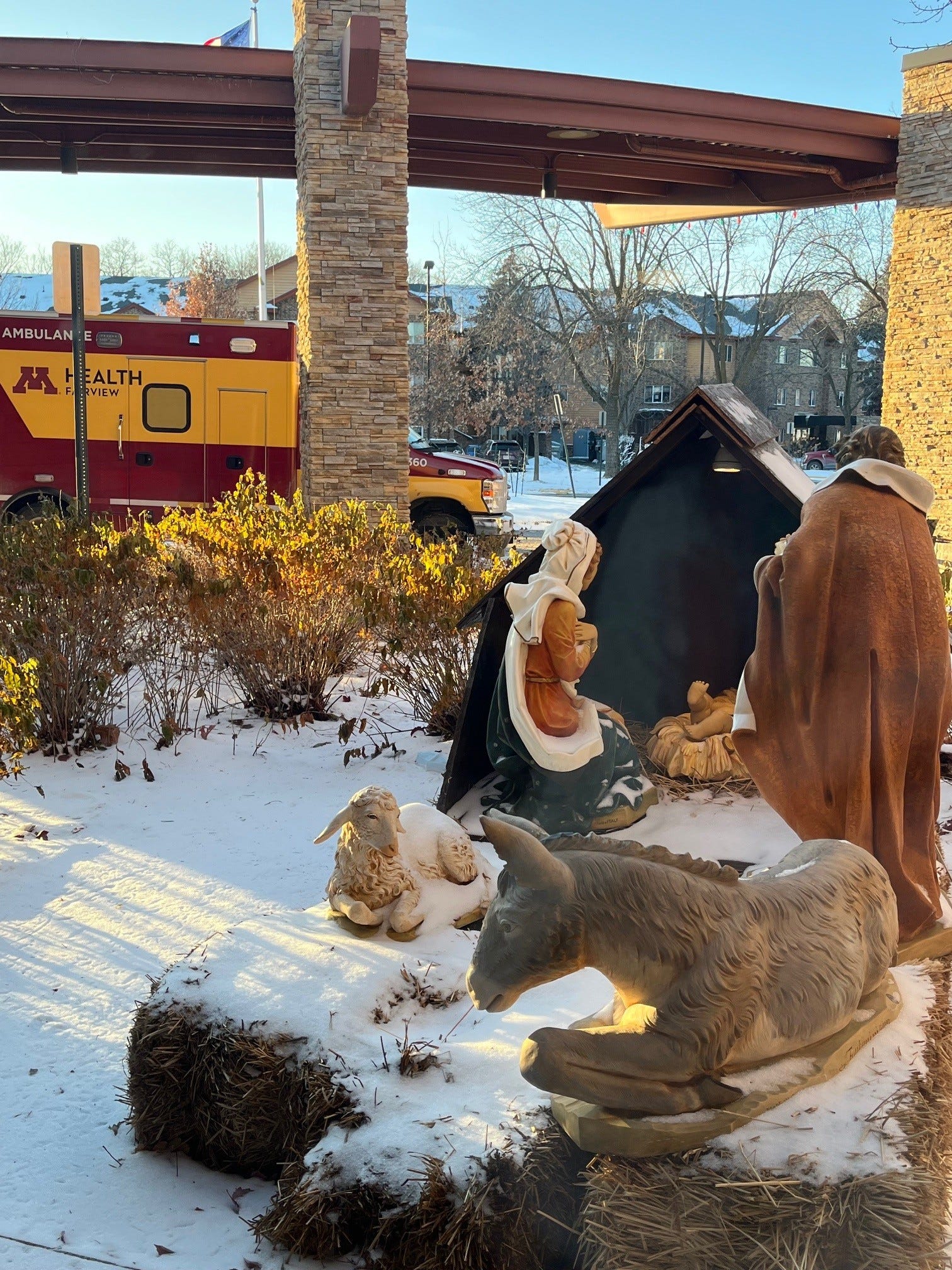
I feel drained, sad, and depleted. I am not okay. I cry a little bit every day. In early December I was at the cemetery to hang a Christmas wreath for my mom’s headstone and found myself bent over, sobbing and raging against her in illogical ways—for leaving us, for not helping, for not showing up and doing more from her place in heaven. Grief doesn’t always make sense.
My dad—my strong and independent and “can do anything” Dad— has become so physically weak in such a short time. In mid-October, he was picking up all the leaves in his yard, running them out to the city compost by the truckload, and climbing up and down the ladder in his garage, taking the porch storm windows out of the attic. One month later, he was unable to walk, eat, or think clearly. I feel incredulous when I think how quickly any of our lives can change—whether from a stroke, disease, accident, or act of violence.
The lesson might be different for each of us, but I’m thinking of how I must draw on gratitude each day and how hard I need to lean on my faith. In a Christmas letter sent to us this year, our friends talked about the dark times we find ourselves in. They ended their letter with this hopeful sentiment, “It is often in the darkest skies that we see the brightest stars. So we look for the stars in our lives and stay hopeful.” This is now snipped and taped to the side of my fridge as a reminder to myself to keep looking for the light in the darkest of times.
In the Upper Midwest, we are past the winter solstice and just coming out of our longest time of darkness. I’m so glad for that. I am looking for light wherever I can find it—in the sky, in others, in the beauty of creation, or in unexpected acts of kindness. I pray for eyes to not miss the specks of light.
If you received this by email, check out my page and read past essays on Making Space.
Oh Wendy, my heart breaks for you and your dad and his situation 💔 still crying 😢. Hugs and wishing you strength and courage to do what’s being asked of you right now. 🤍
It is difficult to know which aspect is the hardest, yes? When they all are so impossible. And yet, by God's grace you keep on keeping on. Sending prayers. Sending prayers.